Best Hedge Options For Troutdale, Oregon.
If you live in Troutdale, Oregon, you already know that wind is part of everyday life. Located near the mouth of the Columbia River Gorge, Troutdale regularly experiences stronger winds than many nearby communities. While those breezes help moderate summer temperatures, they can also damage gardens, dry out landscapes, reduce outdoor comfort, and increase heating costs during winter. One of the most effective long-term solutions is planting a living windbreak. A properly designed hedge not only blocks wind but also creates privacy, reduces noise, protects gardens, and adds value to your property. According to Oregon State University Extension, well-designed hedgerows and windbreaks can reduce wind speeds by as much as 75% when properly planted and maintained.
For homeowners in Troutdale, three hedges consistently stand out as great options for your landscape.
Thuja plicata (Western Red Cedar)
Thuja occidentalis (Arborvitae)
Portuguese Laurel (Prunus lusitanica)
Let's look at why each performs so well in Troutdale and the greater Pacific Northwest.
Troutdale's location makes it one of Oregon's windiest communities along with Corbett, and other towns in the Gorge. Strong easterly Gorge winds can occur throughout the year, especially during fall and winter. These winds can wreak havoc on your landscape in a veriety of ways. We can midigate the damge caused by these winds by installing winbreaks, a barrier of trees , shrubs, or other materials plnated or placed to reduce or redirect windspeed.
A quality windbreak provides numerous benefits:
Reduces wind around homes and outdoor living areas
Protects vegetable gardens and ornamental plants from damage and desiccation.
Reduces soil moisture loss
Creates wildlife habitat
Lowers energy costs by decreasing winter wind exposure
Increases privacy while reducing traffic noise
Oregon State University recommends evergreen hedgerows over deciduous for year-round wind protection because they maintain dense foliage throughout every season.
1. Thuja plicata (Western Red Cedar)
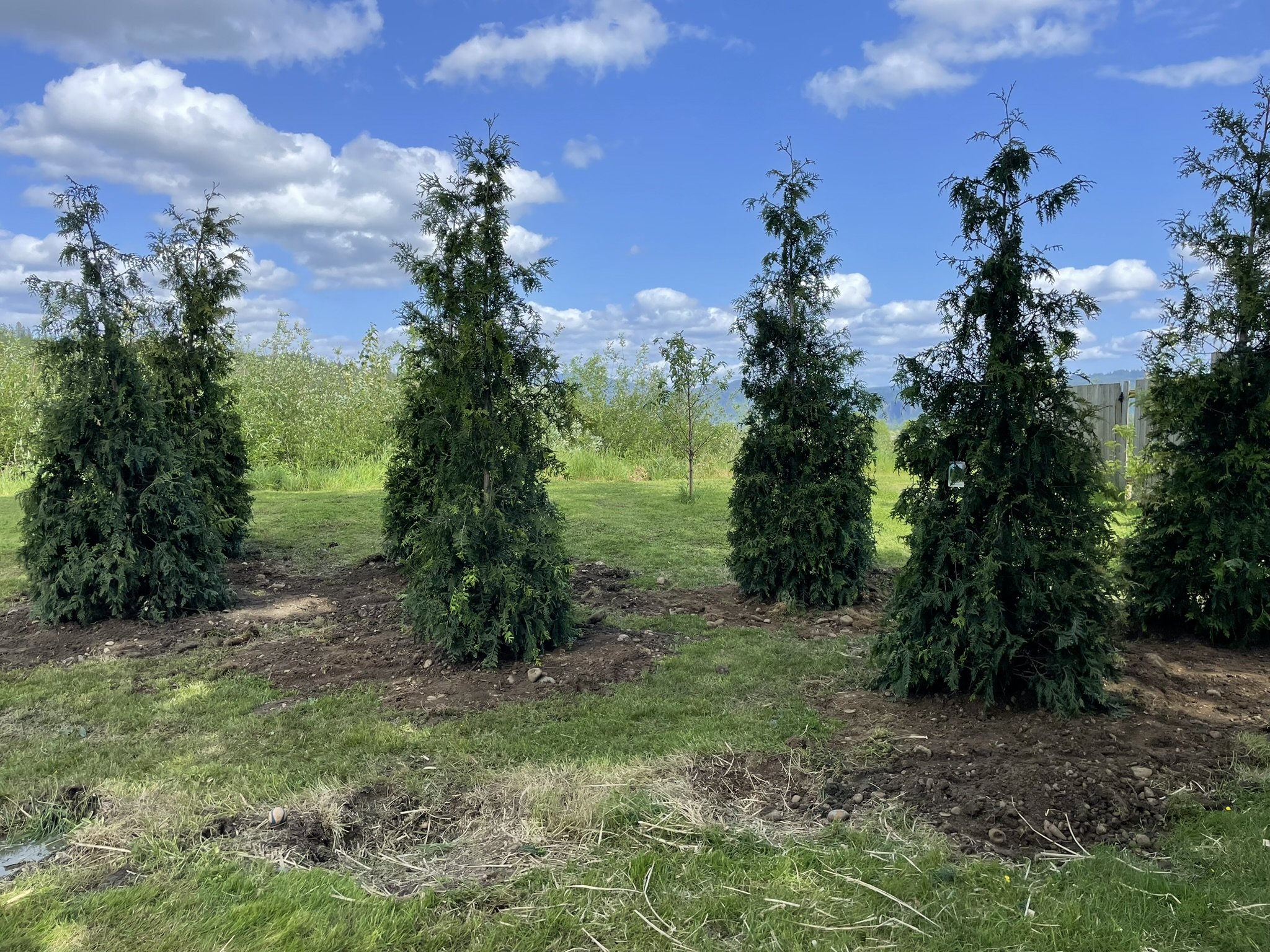
Image of Western Red Cedar windbreak installed by Bithell Nursery & Landscape in the Gorge area. These trees in the photo are approx 15ft tall.
Western Red Cedar is arguably the best overall windbreak tree for Troutdale and much of western Oregon. As a native Pacific Northwest species, it naturally thrives in Troutdale's cool, wet winters and dry summers once established.
Advantages Include:
Native to western Oregon
Excellent wind resistance
Long lifespan
Dense evergreen foliage (Especially when sheared oncer per year)
Excellent wildlife habitat
Beautiful natural appearance
Extremely durable once mature
Because it evolved in our regional climate, Western Red Cedar tolerates winter storms better than many imported hedge species. For larger rural properties, acreage, farms, or homes exposed to Columbia Gorge winds, it is difficult to find a better long-term windbreak.
Growth Rate
Approximately 1–2 feet per year under good growing conditions.
Mature Size
Height: 50–70+ feet (can be maintained much shorter at 10-20ft)
Width: 15–25 feet if left untrimmed
Best Uses
Large privacy screens
Acreage boundaries
Farm windbreaks
Shelterbelts
Property lines
2. Thuja occidentalis (Arborvitae)
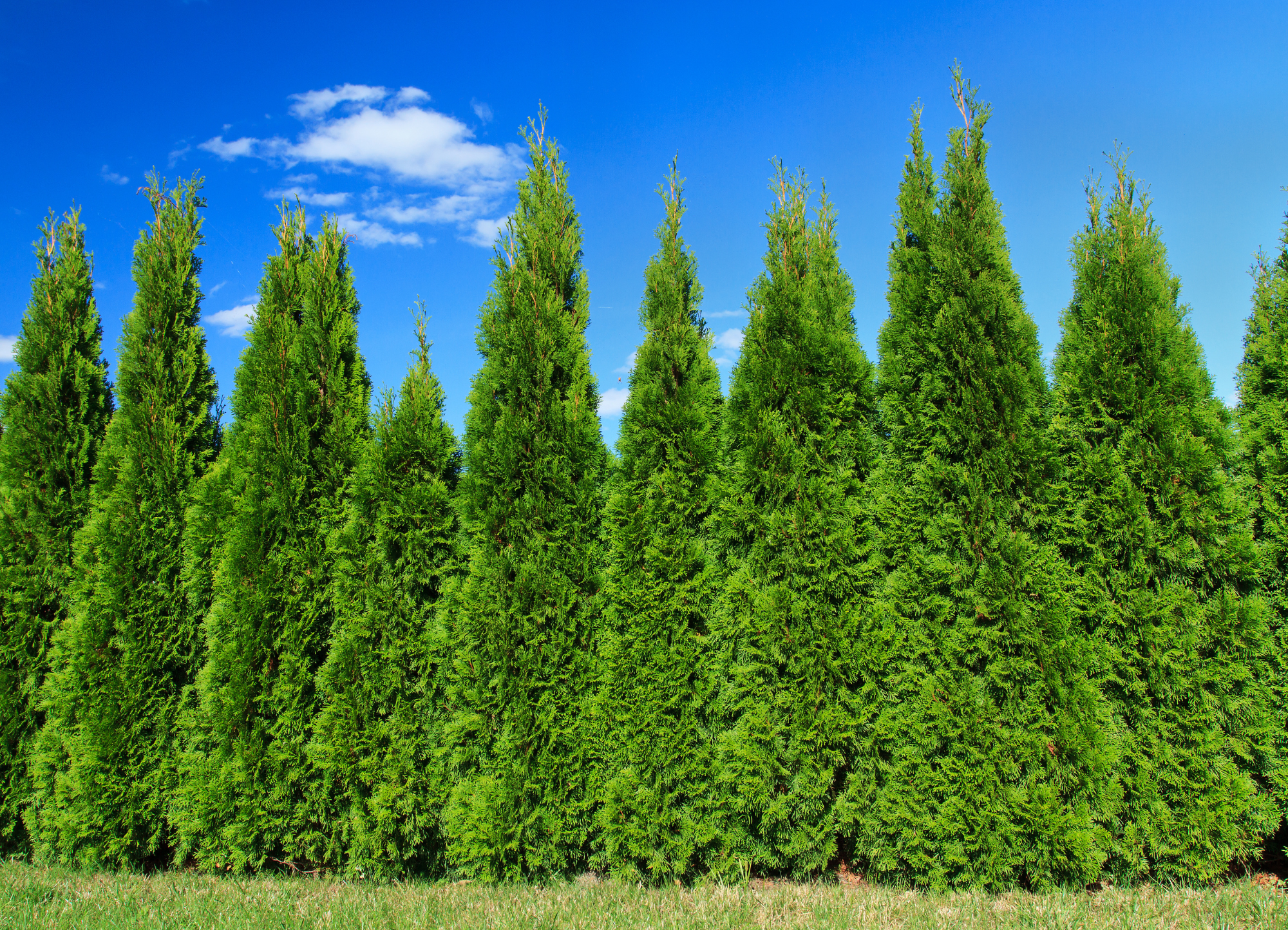
Image of Emerald Green Arborvitae Hedge.
Arborvitae remains one of the most popular privacy hedges throughout Oregon. Although it is not native to the Pacific Northwest, it performs very well when planted in the right conditions.
Oregon State University Extension notes that arborvitae is:
Low maintenance
Narrow growing
Evergreen
Excellent for privacy
Well suited to Oregon landscapes when properly sited
Advantages
Fast establishment
Dense foliage
Attractive formal appearance
Excellent for suburban properties
Requires relatively little pruning
Growth Rate
Around 1–2 feet annually when cared for properly.
Mature Size
Varies by cultivar.
Popular 'Emerald Green' varieties typically reach:
Height: 12–15 feet ( Can be maintained at shorter heights)
Width: 3–4 feet
Larger cultivars may exceed 25 feet.
Important Considerations
Unlike Portuguese Laurel, arborvitae does not regenerate from old bare wood. If pruned too aggressively into brown interior branches, those areas generally will not produce new green growth. Oregon State University recommends light pruning rather than severe cutbacks.
3. Portuguese Laurel (Prunus lusitanica)

Image of a dense Laurel hedge trimmed by Bithell Nursery & Landscape in the Portland Area.
For homeowners wanting an elegant hedge with a more refined appearance, Portuguese Laurel is an outstanding choice. Unlike conifers, Portuguese Laurel produces glossy evergreen leaves that resemble a traditional ornamental shrub while still creating a dense privacy screen.
Advantages
Beautiful dark green foliage
Dense year-round screening
Excellent pruning tolerance
Faster recovery from trimming
Attractive red stems
More formal appearance
Because it tolerates pruning extremely well, Portuguese Laurel is ideal for homeowners wanting a crisp, manicured hedge.
Growth Rate
Typically:
1–2 feet annually
Mature Size
If untrimmed:
Height: 20–30 feet (Can be controled at shorter heights)
Width: 15–20 feet
Most homeowners maintain them between 8 and 15 feet.
Best Uses
Residential privacy
Property boundaries
Noise reduction
Formal landscapes
Wind protection
Which Hedge Creates the Best Windbreak?
1. Western Red Cedar (Thuja plicata)
Its large mature size and dense evergreen canopy make it the superior long-term windbreak. Especially for larger properties and extreme wind conditions. This is the best for wind protection.
2. Arborvitae
Ideal where space is limited and a narrow hedge is preferred, perfect for suburban lots. Still provides great windprotection but doesnt get as larger as Western Red Cedar.
3. Portuguese Laurel
Offers excellent wind reduction while creating one of the most attractive evergreen hedges available. Great for extreme winds and well suited for both large or smaller lots.
Designing an Effective Windbreak
According to Oregon State University Extension, the most effective windbreaks are planted perpendicular to prevailing winds and use dense evergreen vegetation. Multi-row windbreaks provide the greatest protection on larger properties, while even a single well-maintained hedge can significantly reduce wind around homes and gardens. Avoid gaps, as openings allow wind to accelerate through the barrier and reduce its effectiveness.
Final Thoughts
For Troutdale homeowners, a hedge is much more than a privacy screen. It is an investment that improves comfort, protects your landscape from Columbia Gorge winds, and enhances curb appeal for decades. If your goal is the strongest long-term windbreak, Thuja plicata (Western Red Cedar) is the top recommendation thanks to its native adaptation, durability, and dense evergreen growth. If space is limited, Thuja occidentalis (Arborvitae) offers a dependable, low-maintenance screen. If you prefer a polished, formal appearance with excellent pruning tolerance, Portuguese Laurel is hard to beat.
For additional guidance on hedge design, windbreak planning, and arborvitae care, Oregon State University Extension provides excellent resources: